
One of the most popular arguments among investors about mutual funds is whether to invest in Regular Mutual Funds or Direct Mutual Funds. Direct mutual funds seem more appealing at first since their expense ratio is a little lower. Because of this, a lot of investors think that direct plans are usually superior.
But investing isn’t simply about saving a little bit of money. It’s about making the correct choices, remaining on track, avoiding mistakes, and reaching your long-term financial goals. Regular mutual funds are usually the better and safer alternative for most investors, especially novices and even some experienced ones.
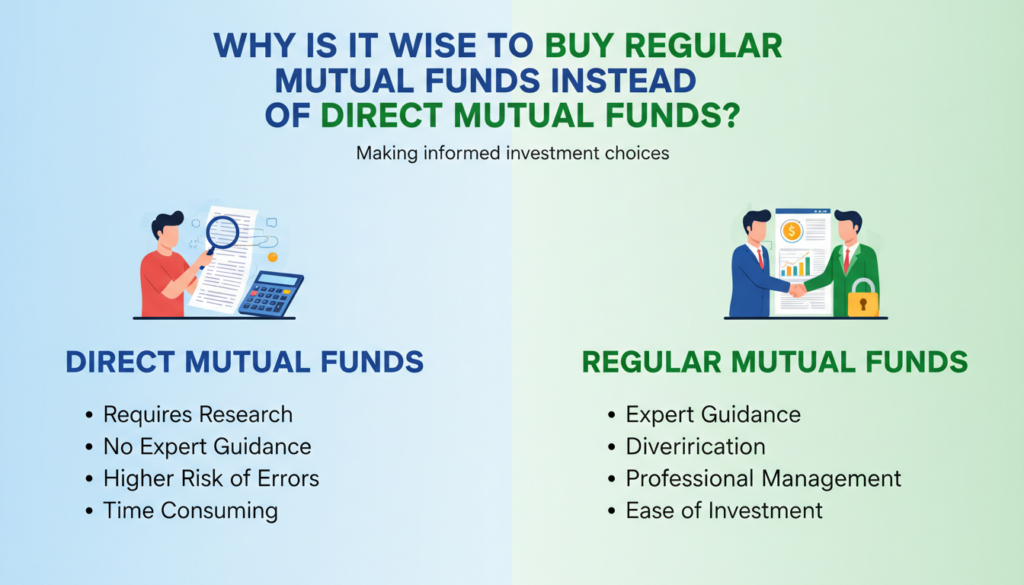
This blog post talks about why most investors should buy ordinary mutual funds instead of direct mutual funds.
Understanding the Difference Between Direct and Regular Mutual Funds
It’s crucial to know what they really signify before you choose between the two.
Regular Mutual Funds:
You can buy regular mutual funds from a bank, a financial platform, a mutual fund distributor, or an advisor. The expense ratio includes a little fee that the adviser gets for giving advice and continuous support.
Direct Mutual Funds:
You buy direct mutual funds straight from the fund house, with no middleman. The expense ratio is a little lower because there is no advisor commission.
Direct funds seem cheaper on paper, but that’s not the only thing that matters when it comes to investing.
1. Getting the right advice is more important than having a lower expense ratio.
The best thing about regular mutual funds is that they give you competent counsel.
A lot of investors have trouble with queries like:
• Which fund should I pick?
• Is now a good moment to put money into something?
• Should I stop my SIP when the market goes down?
• What is the best way for me to rebalance my portfolio?
A competent counselor will help you:
• Choose funds that fit with your aims
• Don’t make decisions based on your feelings while the market is volatile.
• Keep your money in the market for a long time
• Make a portfolio with a lot of different types of investments
The extra money you could lose by making one bad choice is much more than the modest difference in expense ratios between direct and ordinary funds.
2. Managing your behavior is the key to making money.
The markets go up and down. When the market falls or corrects, a lot of direct investors worry and:
• Stop SIPs
• Take money out of assets at the worst time
• Move money between funds often
An advisor is like a behavioral coach who helps you stay calm and focused.
Studies have demonstrated over and over again that investors who act on their feelings make much less money than the funds they invest in.
Regular mutual funds safeguard investors from making emotional mistakes, which is worth a lot.
3. Choosing a fund is not easy
It’s not as easy as looking at past returns to pick the right mutual fund.
You need to look at:
• Risk profile
• Consistency of the fund manager
• Style of investing
• Overlap in portfolios
• Cycles in the market
• Fit with your goals
Most individual investors don’t have the time, equipment, or knowledge to do this right.
With conventional mutual funds, a qualified advisor:
• Gets rid of funds that aren’t right
• Pairs your investments with your life goals
• Looks over and updates your portfolio on a regular basis
Even though the expense ratio is a little greater, this expertise generally leads to superior returns in the actual world.
4. Reviewing and rebalancing your portfolio on a regular basis
You don’t just invest once.
Your life changes:
• More money comes in • Goals change
• The willingness to take risks changes
• The state of the market changes
Regular mutual funds come with ongoing help, such as:
• Reviews of portfolios
• Suggestions for rebalancing
• Planning that saves on taxes
• Changes to SIP
Direct investors often don’t read reviews, which might cause: • Too much exposure to hazardous assets
• Bad asset allocation
• Missed chances
5. Time, Ease, and Peace of Mind To manage your own investments,
you need to: ## Learning all the time •
Regularly keeping track
• Keeping up with market news
• Taking care of papers and platforms
This can be too much for professionals, business owners, and people with a lot going on.
With standard mutual funds:
• You save time
• You lower your stress
• You get help from experts
• You pay attention to your job and your life
The peace of mind alone is worth a lot more than a small difference in price.
6. The difference in cost isn’t as big as you think.
The difference in expense ratios between direct and conventional plans is normally between 0.5% and 1%.
But think about this:
• Will I keep investing without help?
• Will I keep my money in the market when it crashes?
• Will I do the right thing when I rebalance?
• Will I stop chasing after past gains?
If you don’t know the solution, the advisor’s worth is much higher than the fee.
In truth, a lot of regular plan investors get higher realized returns because they are more disciplined and plan better.
7. Not Everyone Should Use Direct Mutual Funds
You can only use direct mutual funds if you:
• Know a lot about money
• Have a good understanding of market cycles
• Can manage feelings
• Have time to keep an eye on investments
• Are sure about how to build a portfolio
Regular mutual funds are the better alternative for everyone else, even beginners and people who want to reach long-term goals.
Last Thoughts: Choose Wisdom Over Cheapness
When you invest, you shouldn’t just pick the cheapest option; you should pick the smartest one.
Regular mutual funds give you:
• Help from experts
• Consistency and discipline
• Investing with a goal in mind
• Managing risk
• Building wealth over time
Most investors find that regular mutual funds are much better than direct mutual funds because they offer support, guidance, and peace of mind.
We at moneyempireonline.com think that making smart investments is more than just getting the best deal. A smart advisor doesn’t simply assist you invest; they also help you stay invested and reach your financial goals.


